
Bachelor's degree programme in Musicology
Musicology with a field of specialisation on music theatre studies or artistic-musical training
Music is almost omnipresent, and it is always embedded in contexts. Musicology deals with music at all times, i.e. with contemporary pop, rock and computer music as well as music from the romantic, classical, medieval and ancient periods. The perspectives are diverse, dealing with music as practice, music as art, music as a carrier of meaning, music as text and much more. Analysing compositions or recordings is just as important as critically examining the social functions of music, cultural-historical contexts, composers, performers and recipients.
The Detmold Bachelor's degree programme in Musicology combines the academic study of music in all its diversity with an individual focus. You can choose between a focus on music theatre studies (without an aptitude test) or musical training (with an aptitude test) in the form of instrumental or vocal lessons, possibly also conducting or composition/music theory. Art and science as well as insights into theatre practice thus complement each other to form a comprehensive music-related Bachelor's degree course.
The elective specialisation makes up around a quarter of the course. The main part of the programme consists of musicology and music theory courses on the history of music from antiquity to the present, musicological work, music theory and analysis as well as the diverse cultural and systematic fields of musicology.
Good prospects: Musicology as a profession
A special feature of the degree programme is the high proportion of professional practice in the form of project work, internships and courses on (digital) editing, presentation and mediation techniques. The six-semester course concludes with a Bachelor's thesis in musicology and qualifies students for a wide range of music and culture-related professions, for example in the field of music theatre, as well as for admission to a relevant Master's degree course.
Studying in Detmold - and also abroad
The degree programme is run by the Paderborn University and in cooperation with the Detmold University of Music. The majority of seminars and lectures in the subject area of musicology take place in Detmold. In addition, individual courses are offered at other locations (Paderborn University campus, HNI Paderborn, KreativInstitut.OWL) or digitally. The wide range of courses offered by the Department of Musicology, the Paderborn University and the University of Music opens up a wide range of options for an interest-orientated, individual study programme. Thanks to international cooperations, there are excellent opportunities to study abroad.
Key areas
On the Musical Theatre specialisation, you will benefit from strong links to the regional and national theatre scene, from interdisciplinary collaboration with other subjects within the Faculty of Arts and Humanities (particularly Literature and Media Studies) and from close collaboration with the Detmold Opera School, whose productions you will support from an academic and dramaturgical perspective.
Music and digital technologies are closely intertwined today. Computers are used to compose, analyse, produce and perform music. The Music Informatics specialisation within the Bachelor’s degree in Musicology explores these developments and offers students the opportunity to engage with computational, artistic and scientific methods in the context of music.
This specialisation is aimed at students who are interested in both Music and digital technologies, regardless of whether or not they already have programming experience.
What is Music Informatics?
Music Informatics is concerned with the research, development and application of digital technologies in music. This includes, amongst other things:
- digital instruments and musical human–computer interaction,
- computer-aided analysis of music and sound,
- Music in virtual and augmented reality,
- audio and signal processing,
- digital music editions and data structures.
Contents of the specialisation
The programme begins by focusing on fundamental concepts in Computer Science and programming methods. Building on this foundation, students deepen their knowledge of working with sound, Music and interactive media. Key areas of focus include:
- sound synthesis and music generation,
- algorithmic and generative music,
- audio engineering and recording,
- music visualisation,
- live electronics,
- live coding.
The course utilises established computer music environments and programming languages, including, for example, Pure Data, Max/MSP, SuperCollider and OpenMusic.
Another key focus is on scientific perspectives in current fields of research such as:
- Music Information Retrieval (MIR),
- New Interfaces for Musical Expression (NIME),
- musical human–computer interaction,
- Digital Humanities,
- sonification and auditory display,
- artificial intelligence for sound and image.
In addition to these theoretical and practical foundations, the programme also covers the research methods of Music Informatics. These include quantitative, qualitative and artistic-scientific approaches, as well as the development and evaluation of students’ own systems and applications.
There is a particular focus on project-based work. Over the course of their studies, students develop their own artistic or scientific projects. These projects range from interactive sound installations and audiovisual performances to experimental software and interface developments.
Example: Identifying bars in manuscripts using AI
A digital music edition is a scholarly edition of a musical work in digital form. It consists of the musical score, commentary and source information, and often provides access to different versions of the work being edited. AI-based methods now also make it possible to identify bars in handwritten sources.
Example: Live coding in the metaverse
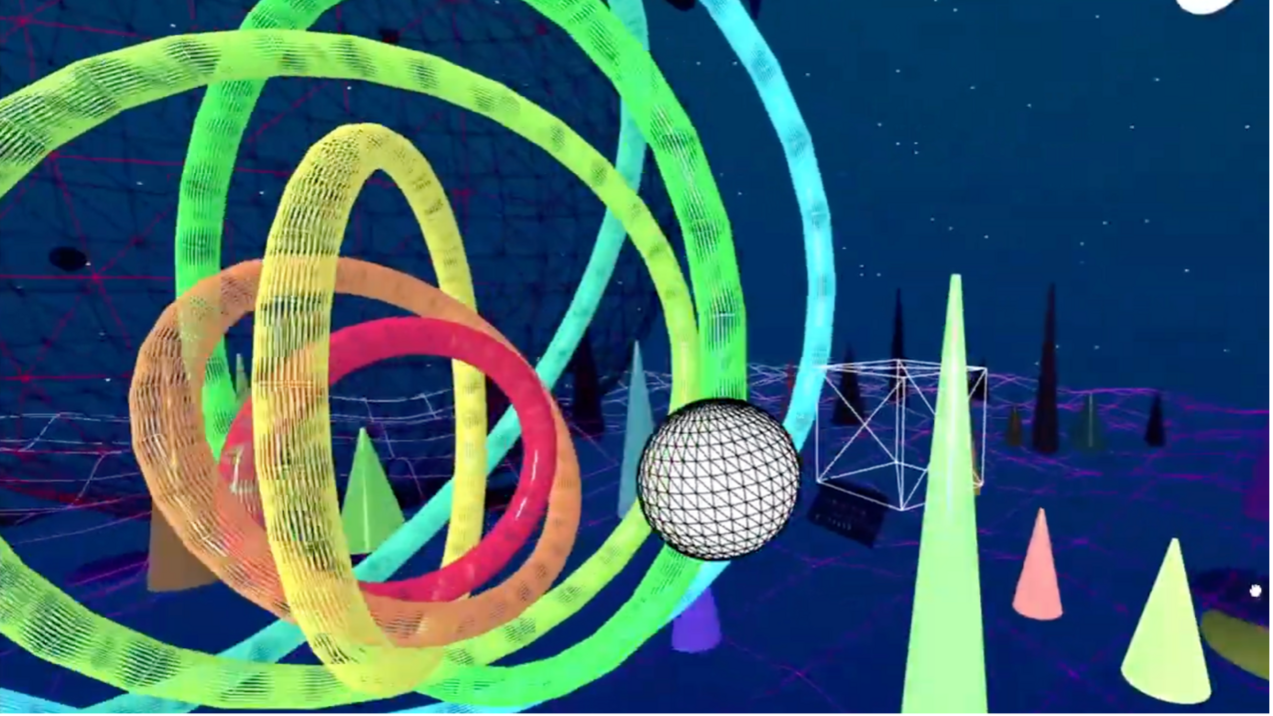
The coders move around the metaverse and enter their code into virtual terminals, which is then instantly transformed into sound and visuals. The audience moves freely around the 3D world.
Example: Spatial Audio & Arts Lab (S.A.A.L.)
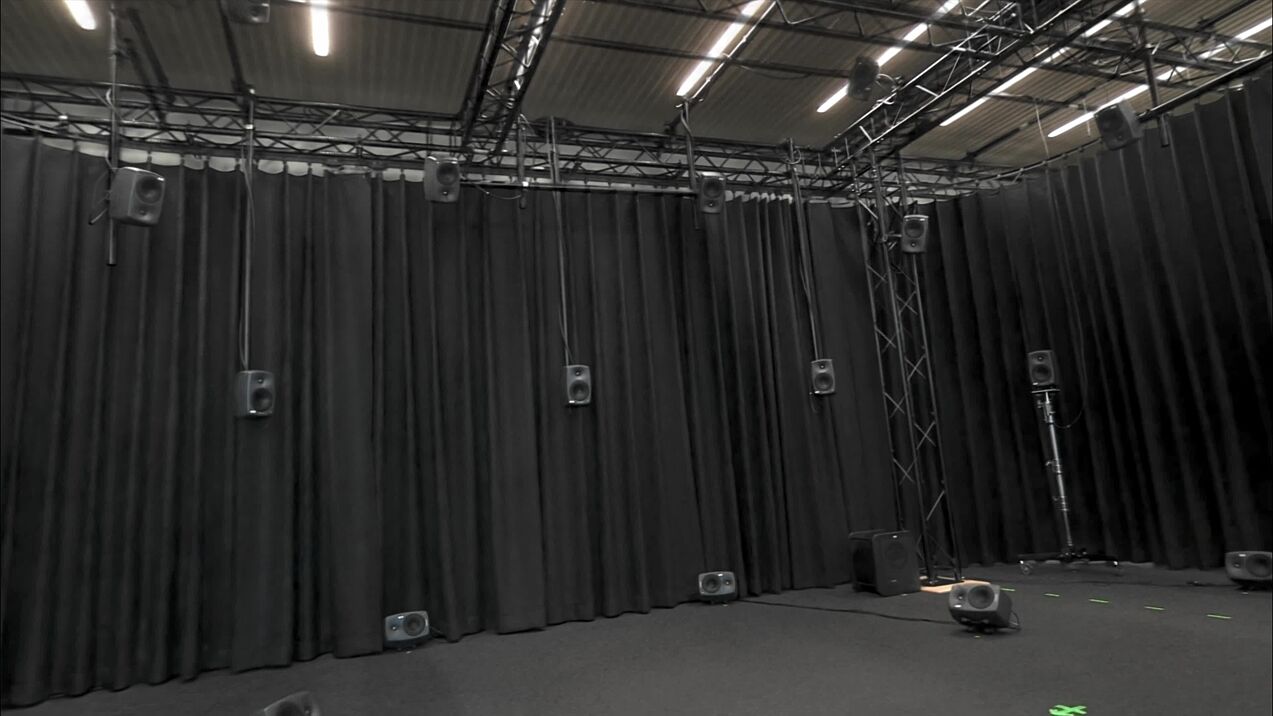
Our high-resolution 43.4-speaker system at the KreativInstitut OWL (KIO) enables precise localisation, movement and spherical sound design. There, we produce content in all standard 3D audio formats, such as Ambisonics, Dolby Atmos and binaural.
Career prospects
The specialisation in Music Informatics opens up new career prospects at the interface between music and technology, for example in the development of interactive audiovisual media, in the field of technology-assisted musical performances, or in music software development.
Digital methods are also becoming increasingly important in musicology research. Knowledge of data structures, programming and digital research tools is relevant for areas such as digital music editing, data analysis, archiving and the digital humanities, amongst others.
Admission requirements & enrolment
Please apply within the general deadlines via the online application portal of Paderborn University. An Aptitude test is not required.
Step 1:
The application is initially made by registering for the Aptitude test at the Detmold University of Music via the online platform muvac. The muvac application deadline for the winter semester ends on 15 March and for the summer semester on 15 November of the previous year).
Step 2:
After passing the Aptitude test, you must apply for the Bachelor's degree programme in Musicology via the Paderborn University's online application portal within the general deadlines. You will then enrol at Paderborn University and also receive the status of a secondary student at the Detmold University of Music.
Information about muvac:
Make your application to the Detmold University of Music via the online platform muvac:
- First create your muvac applicant profile with as much detail as possible.
- Then select the degree programme you are interested in directly in muvac under Institutions - Detmold University of Music. It is important that you upload your application documents in full.
- A processing fee is charged for the application. A refund is not possible.
Important: Finally, please check your e-mail inbox to see if you have received a confirmation e-mail. You will be informed about the status of your application via muvac.
Aptitude test requirements:
For admission to the "Artistic-Musical Training" specialisation, you must demonstrate developmental skills in your artistic specialisation subject as well as knowledge of music theory and musicology. (A sound knowledge of music is essential!) The artistic subject areas taught at the Detmold University of Music are instrumental or vocal subjects, and conducting or composition/music theory may also be possible (please contact the programme director in good time).
The Aptitude test lasts approx. 25 minutes and comprises the following parts:
- Audition/performance in the artistic subject area (approx. 10 minutes)
- Oral examination: Music theory (approx. 10 minutes)
- Musicology (approx. 5 minutes)
1. audition/performance: A programme of approx. 10 minutes must be prepared, comprising at least three musical works or movements of at least medium difficulty from different eras or styles.
For the assessment, the technical skills, i.e. the accuracy in the realisation of the technique, as well as the musical creativity and the appropriateness of the expression are important. As a matter of principle, the applicant's expected developmental ability for the training programme will be included in the assessment. The commission may make a selection from the list of prepared works submitted and interrupt the performance if necessary.
2. music theory: basic knowledge of general music theory, music theory and musical styles, genres and forms must be demonstrated.
3. musicology: In an interview (colloquium of about 5 minutes) about the motivation to study, the applicant should convincingly explain his or her motivation for studying musicology.
You can find the current aptitude test regulations here.